How to Plan Your Kashmir Trip: Best Routes & Places to Visit

Kashmir is easy to get wrong. And lots of travellers do.
They arrive with a Pinterest board and a 4-day itinerary. They rush through the houseboat, skip the saffron fields, miss the quiet corners where Kashmir actually lives. Then they leave thinking they've "done" Kashmir.
The truth is simpler. Kashmir isn't about doing more. It's about slowing down. It's about understanding that a morning on Dal Lake matters more than hitting ten checkpoints. That eating with locals tells you more than any museum. That the valley reveals itself only when you're not chasing it.
Kashmir is not to be rushed. It is to be experienced, wholly, fully, completely absorbed. The magic happens when you can sit, breathe, and let the place sink in.
This guide isn't about cramming experiences into days. It's about understanding what actually works in Kashmir. Where the real food is. Which lakes are worth your time. How to move without feeling frantic. What stays with you long after you've left.
Because Kashmir doesn't give up its secrets to people running around with cameras. It opens itself only to those willing to pause. To listen. To simply be there.
Let's talk about Kashmir.
The Perfect Route

This route takes you through Kashmir's different moods in one seamless journey. You start on Dal Lake, where mornings are still, and the water reflects mountains like a mirror. The houseboat becomes your anchor—a place to wake slowly, drink chai, and watch the valley come alive. Then you move to Gulmarg, where pine forests rise the mountainside, and the air gets thinner and sharper. The Gulmarg Gondola lifts you high enough to see across to the Himalayas. It's the kind of view that makes you forget to take photos because you're too busy looking.
From the peaks, you drop down into Pahalgam's valleys where the Lidder River runs cold and clear through granite cliffs. The water is so blue it doesn't look real. You walk through apple orchards and saffron fields, past villages that feel untouched. There's a quietness here that settles into your bones.
Then comes Sonamarg - the Meadow of Gold. It's exactly what the name promises. Open sky, vast grasslands, glaciers in the distance. You stand there and feel small in the best way possible.
Five days lets you move through all of this without rushing. Two or three hours between each place. Just enough to travel, but not so much that you're exhausted. You arrive, you breathe, you stay long enough for the place to become real. That's when Kashmir shows itself.
Srinagar
Srinagar is where Kashmir begins. It's the water that defines it.
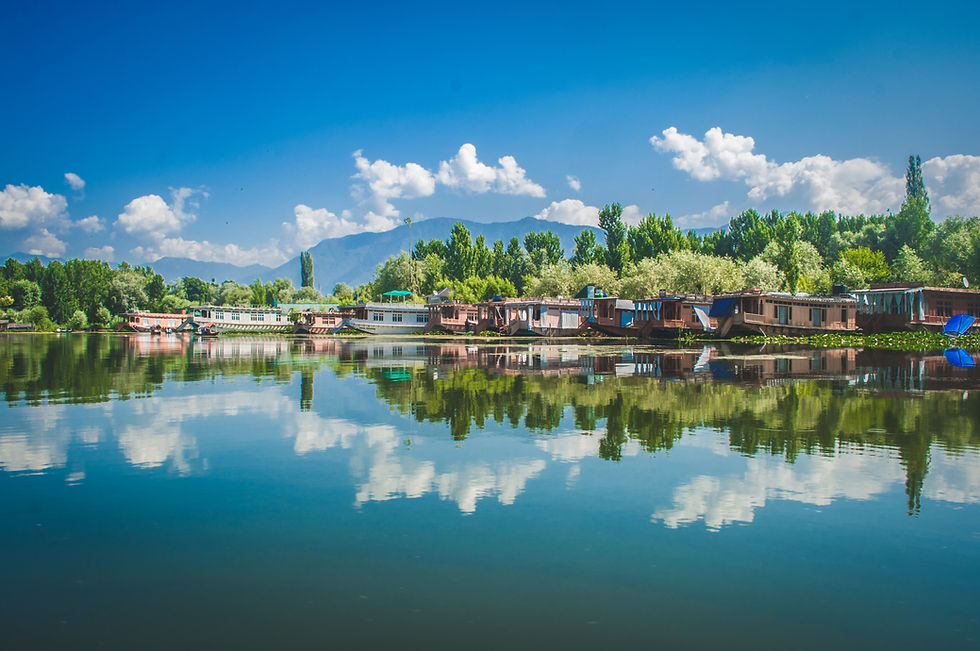
Dal Lake isn't just a lake. It's the heartbeat of the city. Stay on a houseboat and you understand this immediately. You wake to the sound of water lapping against wood. The mountains are right there, reflected so perfectly you can't tell where the real ones end and the reflections begin. A Shikara, a traditional wooden boat, becomes your morning transport. Locals pole these boats through narrow waterways, past floating gardens where vegetables grow on water, past fishermen casting nets that have looked the same for centuries. Early morning is the only time to do this. Before the tourists arrive, before the lake fills with noise.
The Mughal Gardens, Shalimar Bagh and Nishat Bagh, are scattered across the city. They're old, designed to capture water and light and the idea of paradise. Walking through them feels like stepping into a different era. Terraced lawns, fountains that still work, trees that have been here for hundreds of years. Shankaracharya Temple sits on a hill overlooking the lake. The walk up is steep but worth it. From the top, you see all of Srinagar spread below you. The water, the gardens, the old city spreading out like a patchwork.
The old city is a maze of narrow lanes and wooden houses. Walk without a plan. Get lost. Eat food from small shops. Watch life happen in courtyards and on rooftops.
And then there's the food. Wazwan is Kashmiri cooking at its best. Meat slow-cooked in aromatic spices, rice pilafs that taste like nothing else you've had, bread that's still warm. Eat it sitting by the water at sunset. Chai here is different too. Green, cardamom-infused, served in small cups. It's not just a drink. It's how conversations happen, how time passes, how Srinagar feels like home even when it's your first visit.
Gulmarg
Gulmarg is where you go to breathe differently.

The air changes as soon as you arrive. It's cooler, thinner, cleaner. Pine forests cover the mountainside, so thick and green they look almost unreal. The meadow itself sits high enough that you forget about the rest of Kashmir for a while. It's just mountains, sky, and endless grassland.
The Gulmarg Gondola is the reason most people come here. It's one of the highest cable cars in the world, and the ride alone justifies the trip. You start in the forest and rise through layers of altitude. The trees get smaller. The view gets bigger. By the time you reach Kongdoori at the top, you're above the clouds. On clear days, you can see all the way to the Himalayas. The air is so thin you feel it in your lungs. The silence is complete.
But Gulmarg isn't just about the gondola. The meadow itself is worth hours. Walk through the grassland without direction. Sit under a pine tree and watch the light change. The forest is dense and cool, full of moss and shadow. Trails wind through it, some marked, some not. Walk one and you'll lose the world for a while. Just trees, quiet, and the occasional stream running over rocks.
There's a simplicity to Gulmarg that feels rare. No crowds, no noise, no need to be anywhere. Just a mountain, a meadow, and time that moves slower than usual. Come here to remember what silence sounds like. Come here to remember why mountains matter.
Pahalgam
Pahalgam is where the valley goes quiet.

The Lidder River runs through it, cold and clear, flowing down from the glaciers above. The sound of water becomes the soundtrack of your days here. It's constant, soothing, like the valley is always breathing. The river cuts through granite cliffs and pine forests, creating a landscape that feels untouched.
Betaab Valley sits a short drive away. It's named after a Bollywood film, but don't let that fool you. The valley is genuinely beautiful. Turquoise water, rocky cliffs rising on both sides, meadows that stretch far enough to feel infinite. Walk along the river or sit by the water and watch the light change through the day. There are few people here, which is the point. You get the landscape to yourself.
Aru Valley is similar but different. It's deeper, more wooded, with smaller clearings where you can stop and breathe. The trek isn't strenuous. It's just a walk through forest and grassland, with the river always nearby. Locals use these valleys for grazing, for living, for existing quietly. You're not visiting an attraction. You're passing through someone's home.
The town of Pahalgam itself is small and unhurried. There are hotels, restaurants, shops, but nothing feels rushed or commercial. People move slowly here. Conversations happen in tea shops. Families sit by the river in the evening. You can eat fresh trout caught from the Lidder that morning. You can walk along apple orchards. You can sit for hours and not feel like you're wasting time.
This is the Kashmir that doesn't make it to postcards. Quiet valleys, flowing water, mountains in the distance. Stay here long enough and you'll understand why people come back to Kashmir again and again.
Sonamarg
Sonamarg means Meadow of Gold. Standing there, you understand why.

The drive from Pahalgam takes three to four hours, but it's not a drive you want to rush. The road follows the Lidder River almost the entire way. You're never far from water. It winds through forests, alongside cliffs, through villages that feel frozen in time. The river is always there, sometimes rushing, sometimes calm, always moving downhill. Watch it long enough and you stop thinking about time.
As you climb higher, the landscape opens up. Trees thin out. The sky gets bigger. Then suddenly, you arrive at Sonamarg and the valley spreads before you like someone painted it. Grassland stretches in every direction, broken only by patches of pine and the distant snow-capped peaks. In spring and early summer, wildflowers cover the meadow. In autumn, the grass turns golden. That's where the name comes from.
The Thajiwas Glacier sits above the meadow. It's a pony ride away, or a walk if you prefer. The trail climbs gradually through forest and then opens onto glacier ice. It's not a dramatic peak. It's something quieter. Meltwater streams run across the glacier. You can touch snow in summer. The view from the top stretches across the entire valley you've just driven through.
Most people do Sonamarg as a day trip from Pahalgam. Drive in the morning, spend the afternoon in the meadow or on the glacier, drive back by evening. But if you have time, stay a night. Watch the meadow at sunrise. Watch it again at sunset. Sonamarg is where Kashmir feels least like a destination and most like a place that simply exists, unchanged, waiting for you to arrive.
How to Plan Your Kashmir Trip: Best Routes & Places to Visit: Practical Planning
Getting There
Flights to Srinagar come from most major Indian cities. Book in advance during peak season (April to September). Spring and autumn offer the best weather and fewer crowds.
Getting Around
Rent a private vehicle with a driver for the entire trip. An Innova Crysta works well. The driver becomes invaluable—they know where to stop, where to eat, how to navigate the roads.
Where to Stay
Spend one night on a houseboat in Srinagar. It's non-negotiable. Then move to mid-range hotels in Gulmarg, Pahalgam, and back to a heritage property in Srinagar. Good, clean, and comfortable beats luxury resorts every time.
What to Pack
Layers are essential. Kashmir weather changes fast. Pack a light jacket, sweater, comfortable walking shoes, sun protection, and waterproof bags. A good camera or just your phone is enough.
Booking Timeline
Book flights six to eight weeks in advance during peak season. Hotels, two to three months ahead.
Health and Safety
Altitude affects people differently. If prone to altitude sickness, take it easy on the first day, drink water, and eat light. Travel insurance with medical evacuation coverage is smart. The valley is safe. Use normal precautions and check travel advisories before you book.
Best Time to Visit
Autumn (September-October) is best. Clear skies, comfortable temperatures, fewer crowds. Spring (March-May) works but expect tourists and potential snow closures on higher roads. Summer is crowded. Winter should be avoided for this route—roads close and hotels shut down.
If this Kashmir speaks to you, we've curated a five-day experience designed exactly for this. No checkpoints. No noise. Just the valley, slowly revealed.
Ready to experience it?
Explore our Kashmir packages here.


Comments